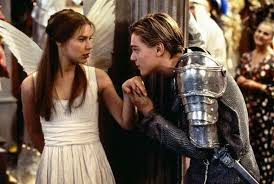
Showing posts with label agenda. Show all posts

Monday, June 04, 2018

June 4, 2018 - June 8, 2018 Daily Agenda

Monday, June 4th:
Break into groups of five and choose one of the following scenes to act out. You must translate the words into modern contemporary English. The scene must be typed and in correct script format. The scene must have action – blocking and business!

Act 1, Scene 5: Pages 809 – 814
Characters: First and Second Servants, Potpan, Lord Capulet, Second Capulet, Tybalt, Romeo, Juliet, the Nurse
Group: Julian, Cierra, Kevin, Makenna, Sam, Takai

Act 2, Scene 4: Pages 831 – 837
Characters: Mercutio, Benvolio, Romeo, Nurse, Peter,
Group: Jason, Jose, Idalia, Lisbeth, Taylor

Act 3, Scene 1: Pages 845 – 852
Characters: Mercutio, Benvolio, Tybalt, Romeo, Prince, Lady Capulet
Group: Alejandra, Hilardy, Kathryn, Lisbeth, Melanie, Yessenia

Act 4, Scene 5: Pages 865 – 873
Characters: Juliet, Romeo, Nurse, Lady Capulet, Lord Capulet

Act 5, Scene 3: Pages 898 - 910
Characters: Paris, Romeo, Juliet, Friar, Prince, Balthasar, Benvolio, Lord and Lady Capulet, Lord Montague
Adolfo, David, Milan, Nadiya, Tymiah

Tuesday, June 5th: 
Students broke into their groups, translated the scenes from Romeo and Juliet into contemporary English and rehearsed for tomorrow's final.

Wednesday, June 6th: 
Students will present their scenes today.
Act 1, Scene 5: Pages 809 – 814
Characters: First and Second Servants, Potpan, Lord Capulet, Second Capulet, Tybalt, Romeo, Juliet, the Nurse
Group: Julian, Cierra, Kevin, Makenna, Sam, Takai

Act 2, Scene 4: Pages 831 – 837
Characters: Mercutio, Benvolio, Romeo, Nurse, Peter,
Group: Jason, Jose, Idalia, Lisbeth, Taylor

Act 3, Scene 1: Pages 845 – 852
Characters: Mercutio, Benvolio, Tybalt, Romeo, Prince, Lady Capulet
Group: Alejandra, Hilardy, Kathryn, Lisbeth, Melanie, Yessenia

Act 4, Scene 5: Pages 865 – 873
Characters: Juliet, Romeo, Nurse, Lady Capulet, Lord Capulet

Act 5, Scene 3: Pages 898 - 910
Characters: Paris, Romeo, Juliet, Friar, Prince, Balthasar, Benvolio, Lord and Lady Capulet, Lord Montague
Adolfo, David, Milan, Nadiya, Tymiah


Monday, May 28, 2018

May 29, 2018 - June 1, 2018 Weekly Agenda

Tuesday, May 29th: 
Finish reading Act 3, Scene 5
Romeo and Juliet
Act 3, Scene 5
Page 865
The morning after their wedding, Romeo and Juliet are in her bed.  Think what would happen if her parents came into the room now.
A lark is a bird that sings at the break of dawn.
A nightingale is a bird that sings during the night.  The lovers are arguing over whether it is the nightingale that is singing which would mean that Romeo doesn’t have to leave right away, or it is the lark which heralds the dawn, which means he must leave immediately.
Vocabulary:
Jocund: humorous, happy, in good spirits
Day is jocund (happy) and is standing on the mountains heralding the news that he (Romeo) must leave.
Cynthia: the Roman name of Diana, the Greek goddess of the moon.  Romeo is saying that if it pleases Juliet, he will say that it is not the sun in the rosy east but a reflection of Cynthia’s (the moon’s) brow.  This is an example of allusion, a reference to another piece of art, mythology, historical event, or literature.

What “good news” does Lady Capulet give to Juliet?
Sam: did not know the answer
Lisbeth: Lady Capulet tells her that she is going to be married to Paris this coming Thursday!!!! It is Tuesday morning – the day after Juliet’s wedding to Romeo.
What clever trick does Juliet play on her mother in the lines 83 – 103?
What does Lady Capulet plan to do to Romeo?
On what day is the “happy event” planned?
What does Lord Capulet compare Juliet to in lines 130 – 139?
How does  Lord Capulet feel about  Juliet’s response to the news he has given her?
What words of foreshadowing does Lady Capulet say?
What does Lord Capulet threaten Juliet with?
Is Lady Capulet a source of comfort to Juliet after her father leaves?
What is the Nurse’s words of advice to Juliet?
What fateful decision does Juliet make regarding the Nurse?


Wednesday, May 30th: 
Went over the answers to the following questions:
What “good news” does Lady Capulet give to Juliet?
Sam: do not know the answer
Lisbeth: Lady Capulet tells her that she is going to be married to Paris this coming Thursday!!!! It is Tuesday morning – the day after Juliet’s wedding to Romeo.
What clever trick does Juliet play on her mother in the lines 83 – 103?
What does Lady Capulet plan to do to Romeo?
On what day is the “good event” planned?
What does Lord Capulet compare Juliet to in lines 130 – 139?
How does  Lord Capulet feel about  Juliet’s response to the news he has given her?
What words of foreshadowing does Lady Capulet say?
What does Lord Capulet threaten Juliet with?
Is Lady Capulet a source of comfort to Juliet after her father leaves?
What are the Nurse’s words of advice to Juliet?
What fateful decision does Juliet make regarding the Nurse?

Acted out the following sceene: 

Act 3, Scene 1:
In this scene, Tybalt is looking for Romeo to challenge him to a duel. Mercutio and he start arguing. Romeo shows up and Tybalt begins to insult him. When Romeo refuses to fight Tybalt and instead tells him that he loves him, Mercutio becomes very angry with Romeo and defends Romeo’s honor.  Romeo steps between the dueling Mercutio and Tybalt and causes Mercutio to be killed by Tybalt’s sword. Tybalt runs away but decides to return – possibly because he doesn’t want to look like a coward – and then he and Romeo duel, with Romeo killing him. Benvolio urges Romeo to run. The Prince shows up, and after a great deal of arguing, decides that since Tybalt started the fight and killed Mercutio, but Romeo killed Tybalt, thereby punishing him for killing Mercutio, Romeo’s life should be spared. However, Romoe will be banished (exiled) from Verona. If he is caught inside the walls of Verona he will be executed.
Act out Act 3, Scene 1:
Mercutio, Benvolio, Tybalt, Romeo, townspeople, Lady Capulet, Lord Montague and the Prince.
Mercutio – Julian, Benvolio – Lizbeh, Tybalt – Milan, Melanie – Romeo, Lady Capulet  - Cierra, Lord Montague – Lisbeth L., Prince – Idalia

Thursday, May 31st: 
Go over answers to Act 3 Open Book Test
Turn in


Friday, June 1st: 
Lockdown and Fire drill
 11:45 - 12:32


Divide into groups and rewrite the following acts in contemporary English. This will be your final project for Romeo and Juliet. 


Friday, May 18, 2018

May 21, 2018 - May 25, 2018 Weekly Agenda for 9th Grade English

Monday, May 21st:
2, 4, and 6

Please make sure you have turned in both Act 1 and Act 2 vocabulary packets and Act 1 and Act 2 open book figurative language tests.

Passed out Romeo and Juliet Vocabulary and Suspense Packet
Passed out Act 3 Figurative Language Open Book test of Romeo and Juliet
Students create sentences using the first six vocabulary words:
Doublet, Dissemblers, Strange, Civil, Fain, Fond

Jose: Doublet
My great-grandfather wore a doublet.

Lizbeth: Dissembler
Lawyers can be considered dissemblers because they will do anything to win a case.

Cierra: Strange - unfamiliar
I saw a movie that was strange.
The man who claimed he was my father was strange (unfamiliar) to me.
She woke up in a strange house.

Julia: Civil
My mother told my little sister to act civil in public places.

Julian: Fain – to gladly do something, happily
Cierra: When my friend got a good grade on the test and I asked her for help, she fain helped me.

 Lizbeth L.: Fond – (adjective) foolish
Cierra: My fond brother thought my friend liked him.
The fond boy tripped walking down the stairs.

Read Act 3, Scene 1 in Romeo and Juliet; page 845
Vocabulary and phrases -
Draws his sword: pulls his sword on the waiter or bar tender.
To be moved: moved to anger and fighting
Quarrel: to argue
Addle: rotten
Doublet: jacket
Riband: ribbon
Buy the fee simple: buy insurance on (foreshadowing)
O simple!: stupid
Consort: girlfriend or a servant or a musician, which is why Mercutio starts making musical puns.
Livery: servant’s uniform which shows the house the servant serves.

According to myth, cats have nine lives.

Why doesn’t Romeo want to fight Tybalt?
Nadya, Lizbeth A., Julia: Because Romeo is now Tybalt’s family through his marriage to Juliet.
Why does Tybalt want to fight Romeo?
Julia: Because Romeo crashed the Capulet party.
List the puns and jokes Mercutio makes even as he is dying. (pages 848)
Rat-catcher (before he is mortally wounded)
“No, ‘tis not so deep as a well, nor so wide as a church, but tis enough, ‘twill do.”
Zounds a dog, a rat, a mouse, a cat to scratch a man to death!”
“I’m a grave man.”
“Thou hast made worm’s meat of me!”
“I am peppered for this world.’

How many times does Mercutio curse both houses? 
Four times. According to myth, the curse of a person on his death bed carries additional power and will certainly come to pass. 
Lines 88, 96, 97, 102

What does Romeo do after Benvolio tells him Mercutio is dead?
Romeo kills Tybalt for killing Mercutio.

What does Benvolio tell Romeo to do after Romeo has slain Tybalt? 
Benvolio: “Romeo, away, be gone!
Benvolio tells Romeo to run, to escape!

What does Benvolio tell the Prince regarding the fight?
Lines 150 – 172
“…that the quarrel was nice… and mentioned the Prince’s displeasure…”

What is Lady Capulet’s response to Benvolio's account of the fight?
“He (Benvolio) is a kinsman to Montague….affection makes him false…..Romeo slew Tybalt…Romeo must not live…”

What is the Prince’s decree?
“And for that offense immediately we do exile him hence.”
He is banished.  If he is found within the walls of Verona “…that hour is his last.”

What is the Prince’s reasoning for the decree? 
Montague says: 
“His fault concludes but what the law should end. The life of Tybalt.” 
Watched Act Three in Romeo + Juliet


Wednesday, May 23rd:
2, 4, and 6
Read Act 3 of Romeo and Juliet
Please do the last four words in your vocabulary packet:
To sack
Cierra: to rob and plunder
The kids sacked the store when the manager was not looking.
The Greeks sacked the city of Troy when they entered the city using a wooden horse.

Entertained:
The senior class briefly entertained the idea of painting the front of the school purple as part of the annual senior prank, but then changed their minds.

Spleen: anger, malice, spite (Spleen is an organ in the body which produces bile, a bitter, scalding hot fluid produced by the digestive system)
The Elizabethans believed that emotions and personality types were the results of various organs in the body producing an excess of fluids.
“To vent your spleen”
Cierra: When I get mad I scream my spleen out to my best friend.

Estate: situation or condition
He is in a bad estate.

Then do the suspense portion of the packet

Then we are going to work on the Act 3 Figurative Language handout
Read “Echo and Narcissus”
Read the rest of Act 3 of Romeo and Juliet
Watch movie
Act some scenes - maybe

Read Act 3, Scene 2, page 853
Juliet is in her bedroom waiting for the night to come so she can be with Romeo! Juliet does not know that Romeo has killed Tybalt and has been exiled (banished) for his killing of Tybalt.
When the Nurse comes in crying and saying, “Oh, he is dead. He is dead!” Juliet immediately thinks who is dead?
What does Juliet quickly figure out when she hears – finally – from the Nurse what has occurred?
What does the Nurse promise Juliet she will do?

Act 3, Scene 3, page 858
In the Friar’s cell
Romeo is hiding there to avoid being captured by the Prince’s men.
What state is Romeo in?
Who arrives at the Friar’s cell and with what news?
What words of advice does the Friar give Romeo?

 What does the Friar tell Romeo and the Nurse to do for tonight?

Act 3, Scene 4, page 863
What is Lord Capulet’s attitude regarding Tybalt’s death?
What do you think the Capulets have been discussing with Paris?
What sudden decision does Lord Capulet make in this scene?

Watch movie!

Friday,  May 25th:
Act out Act 3, Scene One - with swords!
Friday, May 25th:
Daily schedule

Sunday, May 13, 2018

May 14, 2018 - May 18, 2018 Weekly Agenda for 9th Grade English

Monday, May 14, 2018:
Presentations of Act 2, Scenes 1, 2, and 3


Work with Act 2, Scene 4
Adolfo, David, Nadiya, Milan,
Recap:
What happened in the scene before?
Summary:
Brief description of what happens during Scene 4
Description of the characters:
Character:
Mercutio: mercurial, loud, funny, good friend to Romeo
Quotations to show that Mercutio  is mercurial, or loud, or funny, and a good friend to Romeo.
You are going to do this for each character.
Choose three examples of figurative language:
Copy a quotation
Identify it – is it a metaphor, simile, personification, foreshadowing, allusion
Show what is being compared to what.

Take Notes!
Main ideas!
Recap!
Summary
Characters – adjectives
Write down the quotations used that describe the characters!
Figurative language – identify

Act 2, Scene 1 presented:
Julian, Takai, Makenna

Slides but no pictures
Recap
Summary
Figurative language
Characters
Description
Quotations which describe the characters

Act 2, Scene 2 presented:
Idalia, Lisbeth A., Jason, 
Jose presented but contributed no work
Slides with one picture on title page
Recap
Summary
Character Description
Juliet
Romeo
Quotations which describe characters
Figurative language

Tuesday, May 15th:  

Students break into groups to work on their presentations. 

 
Cierra, Julia, Katherine, Kevin
Act 2, Scene 5
Recap: What has happened prior to the scene?
Romeo went to the Friar and arranged the wedding. He met with the Nurse who wanted to find out what type of man he was and whether he was serious. Romeo told the Nurse for Juliet to go to the Friar to be “Shrived” (to go to confession) for their wedding which has been set for that morning!
Summary:
Juliet is waiting impatiently for the Nurse to come back to tell her whether the wedding is on.  When the Nurse shows up, Juliet anxiously asks her what Romeo said, but the Nurse doesn’t answer her right away. The Nurse says that she is exhausted and her joints ache from all the walking.  She is out of breath and cannot speak "so give her a moment", but this really annoys Juliet for she says “how can you say you are out of breath and cannot speak when you have enough breath to say that you are out of breath. Just tell me if Romeo and I are getting married!!  The Nurse is definitely teasing her! Finally, the Nurse tells Juliet to get ready because she is getting married today!

Description of the characters: adjectives describing the characters in the scene
Juliet’s mood: impatient and anxious, but when the Nurse finally tells her the good news, she becomes very happy!!!

Find two quotations which show or demonstrate each character’s mood or personality

Quotation:
“Sweet Sweet Nurse, tell me, what says my love!” – This shows Juliet is impatient but still loves the Nurse.

“But old folks, many feign as they were dead –
Unwieldy, slow, heavy, and pale as lead.” – This quotation shows that Juliet is very impatient!

“Hie to high fortune! Honest nurse, farewell!: - This quotation shows that Juliet is happy! Juliet's moods change quickly from anxious and impatient to ecstatic and joyful, depending on the outcome of the Nurse's journey.

Description of the Nurse’s mood in this scene:
Kind, humorous, joking around a lot as if Juliet were her own child.  The Nurse loves and is protective of Juliet. 
Quotation which shows the Nurse's personality or mood:
“He is not the flower of courtesy, but, I’ll warrant him, as gentle as a lamb!” – This quotation shows the Nurse to be protective.

Quotation, which shows the Nurse's personality or mood:
“Well, you have made a simple choice; you know not how to choose a man….” – This shows the Nurse’s joking side; she is making fun of Juliet and her choice of a husband.

Find two quotations, which show or demonstrate each character’s mood or personality
Find three quotations which show figurative language:
Copy the quotation
Identify – is it a metaphor, a simile, personification, an allusion, or imagery
Then what is compared to what? What is revealed by the comparison?

Figurative Language:
“Love’s heralds should be thoughts, which ten times faster glide than the sun’s beams driving back shadows over low’ring hills.”
Metaphor
Love’s messengers should be as fast as thoughts which travel faster than sunbeams.

Now, find two more examples of figurative language:

“Therefore do nimble-pinioned doves draw Love,
And therefore hath the wind-swift Cupid winds.”
Allusion, Imagery, and Metaphor
Comparing the emotion of love to the ancient Roman myth of Love being carried in a chariot drawn by doves


Wednesday, May 16th: 
Worked with the following group:
Scene 6:
Yessenia, Melanie, Hilaryd, Alejandra, Lizbeth –

Recap:
What happened just before Scene 6? The Nurse tells Juliet that Romeo has made plans for them to marry that very day!!!!

Summary:
The Priest is telling Romeo to slow down because relationships last longer when taken slowly. Juliet shows up and the Priest ushers the couple to be married. The Priest is expressing concern about how quickly the relationship is moving. He is warning that relationships that go too quickly wind up ending suddenly and violently. That people who spend too much time with each other wind up getting really sick of each other.
Characters:
The Priest: wise, kind, concerned, knowledgeable, is a father-figure to Romeo.

Quotation which shows the Priest to be concerned and wise:

"These violent delights…."
He is telling Romeo to slow down, that quick and impulsive relationships frequently turn out badly.

Quotation which shows the Priest to be doubtful about how this will turn out:

“So smile the heavens upon this holy act
That afterhours with sorrow chide us not.”

Vocabulary:
Chide – to punish, to scold

Meaning: The Priest is asking the heavens to smile upon their marriage and not punish them after the wedding.  This suggests the Friar is worried about how the marriage will turn out. 

Character:
Romeo: Confuses lust with love; childish, immature, impulsive, changeable in love

Quotation which shows Romeo to be impulsive and emotional:

“Ah, Juliet, if the measure of thy joy
Be heaped like mine, and that thy skill
To blazon it….”

Meaning:
If you are as ecstatically happy as I am..."

Quotation which shows Romeo to be impulsive and emotional:

Romeo:
“It cannot countervail the exchange of joy
That one short minute gives me in her sight.
Do thou but close our hands with holy words,
The love-devouring death do what he dare –
It is enough I may but call her mine.”

Juliet: wise, smart, good impulse control, mature
Quotations which show Juliet to be wise and smart:

Presentations:

Act 2, Scene 3

Tymiah, Taylor, Jasmine, Salamata

Tymiah: Recap

Taylor: Summary

Salamata: Character Description

Friar

Romeo

Figurative Language: gave some quotations and character descriptions from Act 2, Scene 1

Presentations:
Act 2, Scene 4:

Nadiya, David, Adolfo,

Recap: Adolfo

Summary: Nadiya

David: Description of Characters

Finish tomorrow

Thursday, May 17th: 

Presentations:
Act 2, Scene 5
Recap: Cierra
Summary: Katherine
Characters: David
Nurse: David

Act 2, Scene 6
Recap: Yessenia
Summary: Lizbeth
Character Analysis:
Juliet: Yessenia
Quotations: Alejandra
Figurative Language: Melanie

Watch youtube vido: "Akali: Hip-Hop or Shakespeare?"

Friday, May 18th: 
Watch Act 3 and Act 4 in Romeo and Juliet 
Discussion 


Sunday, May 06, 2018

May 7, 2018 - May 11, 2018 Weekly Agenda for 9th Grade English

Monday, May 7th:
You may break into groups of four and choose two scenes from Act 2, your first choice and your second choice.
What you need to do right now is to write down the names of the people in your group and your two choices of scenes.

Once you are in your group and you have chosen your scene and it has been approved, you will do the following:
Write a brief summary of the scene
Write a character analysis of each character in the scene
Find three quotations which either the character or another character says about him/her and/or a quotation which describes what the character is doing.
Write a thematic analysis of the scene
Choose three examples of figurative language. Copy the examples, identify what type of figurative language they are, and explain them.

Act 2, Scenes 1, 2, 3, and 6 are already taken
Act 2, Scene 1: Makenna Ashley, Julian Diaz, Takai Dixon, Samantha Zelaya
Act 2, Scene 2: Jose Alfaro, Lizbeth Alvarado, Jason Perez, Idalia Saravia
Act 2, Scene 3: Salamata Bocoum, Jasmine Jenkins, Taylor Lewis,Tymiah Whetstone
Act 2, Scene 4: Nadiya Armstrong, Adolfo Guzman, Milan Lacy, David Salinas
Act 2, Scene 5: Katherine Alvarado, Julia Hamey, Cierra Maultsby, Kevin Sanchez
Act 2, Scene 6: Alejandra Cabreras, Hilaryd Gaona, Lizbeth Lemus, Yessenia Perez, Melanie Sandoval

Tuesday, May 8th:  
Break into groups and work on scenes for presentation tomorrow! 

Act 2, Scene 1:
Julian, Sam, Takai, Makenna,
Recap: This scene happens right after the party scene where Romeo meets Juliet and he has forgotten Rosaline and is now madly in love with Juliet.
Setting: Near Capulet’s orchard
Vocabulary:
Orchard is a garden with trees, especially fruit trees!
Characters: Romeo, Mercutio, and Benvolio
Mercutio and Benvolio are in a party mood and are a little bit annoyed at Romeo because they can’t find him! They make dirty jokes about Romeo and Rosaline. They don’t know about Juliet.
Romeo is hiding behind a tree when he hears Mercutio and Benvolio enter. He is hiding while his friends are making dirty jokes about Romeo and Rosaline.
Mercutio: likes to make jokes; likes to party; is a good friend to Romeo,
“He heareth not, he stirrith not, he moveth not;
The ape is dead, and I must conjure him.”
“Romeo! Humors! Madman! Passion! Lover!”
Speak but one rhyme, and I am satisfied!”

Benvolio: More mature; tries to tell Mercutio to stop making fun of Romeo.
“And if he hear thee; thou wilt anger him!”

What is the attitude of both Mercutio and Benvolio toward Romeo’s love for Rosaline:
Benvolio: “Blind is his live and best befits the dark.”
Both of his friends think Romeo’s love for Rosaline is dumb.

Figurative Language:
Romeo: “Can I go forward when my heart is here?”
Identify: Metaphor
Meaning: Romeo cannot leave without his love going with him!

Mercutio: “If love be blind, love cannot hit the mark…”
Identify: Personification
Mercutio is speaking about Romeo and Romeo is blind and will never find the right girl.

Act 2, Scene 2:
Lizbeth, Jason, Jose, Idalia
Recap:
Romeo and Juliet fall in love and then, they find out they can’t be together!!!!!!
Act 2, Scene 1:
Romeo hanging out in the Capulets’ orchard (a piece of land with fruit trees). He hears Mercutio and Benvolio making naughty jokes about Romeo and his love for Rosaline and he hides. After they leave, be comes out and he sees Juliet on the balcony.
Summary:
Romeo overhears Juliet speaking to herself about why must Romeo be a Capulet.  Romeo says if she needs for him to stop being a Montague – then he will!!!!  They profess their love for each other.  He wants to go a little further but she stops him and insists that they get married. And he agrees.  He says he will go to the Friar at day break to make arrangements for marriage. 
Character:
Juliet: wise because she is cautious,  loyal, passionate
“What satisfaction canst thou have tonight!” – Wise and cautious!
“Do not swear by the inconstant moon!” – cautious
“I have no joy in this contract tonight, it is too rash, too unadvised, too sudden!” – wise and cautious

Romeo:
Three quotations which show Romeo’s personality


Figurative Language:
Too like the lightning, which doth cease to be
Ere one can say it lightens!
Identify what this is:
What is being compared to what?
The way their relationship is going is too fast, too much like the lightning that disappears before one can say, “Look! There’s lightning!”

Two more examples of figurative language from Act 2, Scene 2

Wednesday, May 9th:  


How to correct your test:

Vocabulary
1.     Loins means
c. Thighs

Romeo and Juliet Figurative Language Test
1.     What is an iamb?
a.      Two syllables that are unstressed/stressed

Tomorrow, go straight to the auditorium. Bring work!


Presentations:
Work with Act 2, Scene 3:
Salamata, Tymiah, Taylor, Jasmine,
Recap: What happened in Act 2, Scene 2 Romeo and Juliet decide to get married after knowing each other about ten hours.
Setting: At the Church, in the Friar’s cell at dawn. Romeo has been talking to Juliet all night long and has just left her house to see the Friar about marrying them THAT DAY!!!!
What was the Friar doing? The friar was collecting herbs to make medicine and poison. This is important because it will be an important plot point.
Summary: Romeo goes to the Friar (a priest) to ask him to marry him and Juliet.
The priest agrees because he wants to end the feud between the families.
Character:
Romeo is excited because he wants to marry Juliet. He was madly in love with Rosaline just a few hours ago, and now he’s forgotten all about Rosaline and asking Juliet to marry him after knowing her ten hours!
Qualities to describe Romeo: Fickle – quickly changing feelings about someone, particularly regarding affection, interests, or loyalty.  Immature. Fast. Impulsive – acting without forethought or without thinking things through. (Not looking before leaping!!!!)

The Friar: a priest, who loves Romeo and is a father-figure to him. The Friar is a wise man who gives Romeo advise when he needs it.  The Friar was picking herbs to make medicine;  he is a chemist and a doctor.

Find two quotations that describe Romeo's personality.
Find two quotations that describe the Friar's personality. 

Figurative Language:
Quotation:
“Now, ere the sun advance  his burning eye
The day to cheer and night’s dank dew to dry”
Identify it!
It is a couplet – which means that two sentences next to each other rhyme.
Personification: giving inanimate objects human characteristics

Quotation:
“Young men’s eyes then lies
Not truly in their hearts, but in their eyes.”
Identify:
Metaphor: Young men look at young women with their eyes and not with their hearts.
What is the Frair saying? Young men only fall in love with girls they think are pretty and do not see with their their hearts the goodness in young girls’ hearts and souls. 


Sunday, April 29, 2018

April 30, 2018 - May 4, 2018 9th Grade English

Monday, April 30th:
No 4th Period today. Special Schedule

Tuesday, May 1st: 
Shortened Day
Go over Open Book Test on Act 1
 

Work on the Open Book Test  - third page #13 - 38
Kahoots – over Romeo and Juliet Act One
Tomorrow a test over Romeo and Juliet Act One!
Treading means to roam or to walk
Using human characteristics to describe inanimate objects
Well-appareled: well dressed
Tread: to walk
Oxymoron is combination of two contrasting ideas: dry ice,  jumbo shrimp
Romeo uses a series of oxymorons to describe the Capulets and the Montagues love for fighting. He says this after the huge fight in Act 1.
Went over the third page of the open book test

Kahoots over Romeo and Juliet Act One

Wednesday, May 2nd: 
Short test on Act 1 Romeo and Juliet
Open Book Figurative Language Test on Romeo and Juliet Act One is due today
If you have not turned in your Act One Vocabulary and Iambic Pentameter Packet, please do so now. 
Watch Act 3 of Baz Lurhman Romeo + Juliet


Thursday, May 3rd: 
Continue reading Romeo and Juliet Act 2
Reading logs 

-->
Pass out Act  2 Vocabulary and Character Packet for Romeo and Juliet
 Read Act 2, Scene 1, Scene 2, Scene 3 of Romeo and Juliet
Page 818

Questions for Scenes 1 and 2
1.     Where are Mercutio and Benvolio in Scene One?  What kind of mood are they in?
2.     Where is Romeo in Scene One? What is his attitude about what his friends are saying?
3.     What does Juliet demand Romeo do the next morning?
4.     How long have Romeo and Juliet known each other?
5.     What does Romeo ask the Friar to do?
6.     Why does the Friar agree to do what Romeo asks?


Friday, May 4th: 
Continue reading Romeo and Juliet Act 
Reading logs

Romeo and Juliet
Read Act 2, Scenes 4, 5, and 6
Page 831 - 841
Setting: A square in the town of Verona.
Watch Zeffirelli’s version of Act Two of Romeo and Juliet


Monday, April 23, 2018

April 23, 2018 - April 27, 2018 9th Grade English Agenda


 Monday, April 23, 2018


Romeo and Juliet
Page 804
Act 1, Scene 1
Big Fight  between the Capulets and the Montagues
Everybody is fighting (except for Romeo)
Prince shows up and says if you start another fight again, Old Capulet and you, Old Montague, if you start another fight you will pay for it with your life!!!!!
The Montagues then talk to Benvolio about Romeo and how he is depressed over Rosaline.  They see Romeo walking down the street and his parents ask Benvolio to talk to him about why he is depressed – melancholy!!!!
Act 1, Scene 2
Katherine – Capulet and Paris are discussing Paris marrying Juliet. Capulet says she is too young and allow two summers to wither in their prime, and if she agrees then he will consent to the marriage.
Jason and Katherine - Capulet invites Paris to a party.
Idalia - Capulet gives an illiterate (Milan – if you are illiterate, then you cannot read or write) servant the invitations to the party to be delivered.
Lizbeth – “But I am sent to find those persons whose names are found here….”  I must to the learned.
Milan – the servant sees Romeo walking down the street and he hands  him the list of names to be invited to Capulet’s party tonight.
What does Romeo find on the list?
Julia – He finds Rosalind’s name and he decides to do what?
Julia – Romeo decides to go to the party which is dangerous because he is going into enemy gang territory.
Scene 3:
Cierra – Takes place in Juliet’s home! Lady Capulet talks to Juliet about marrying Paris.
Milan – the Nurse is there also. We found out that the Nurse has four teeth, loves Juliet like her own daughter.  Juliet and the Nurse are very close – like mother and daughter.
The Nurse had a daughter about Juliet's age but she died. 

Act 1, Scene 4
Setting: In front of the Capulets’ home, Romeo and his drunken friends, Mercutio and Benvolio, are wearing masks preparing to enter the Capulets’ party. Mercutio is invited – he is a friend of both houses – but Romeo and Benvolio are not. They are bitter enemies and members of a rival gang.  They are entering enemy territory!
What kind of mood is Romeo in at the beginning of the scene?
Cierra – “whatever”
Lizbeth – annoyed, stressed, agitated
Melanie - agitated
Why is he agitated?
Look on page 807, between lines 45 and 55
Cierra – He had a dream!
Look on page 808, lines 106 – 111
That Romeo would die an untimely death which would be caused by a series of events that will be started tonight!
Melanie:
Milan:

Act 1, Scene 5:
Page 809
Setting: the Capulets’ party!!!!!
What kind of mood is Lord Capulet in?
Cierra – Capulet is in a very good mood!
Mercurial  - what is the chemical in thermometers that goes up and down!
What is someone called whose personality goes up and down?
Mercurial! A person who is mercurial has mood swings!
Who does Tybalt overhear at the party?
Jose (Cierra)  – Romeo
What does Tybalt want to do when he realizes who is at the party?
Jose (Cierra) – Tybalt wants to fight Romeo!
What does Capulet tell Tybalt to do?
Cierra and Adolfo – Capulet tells Tybalt to stop!
Does Romeo know the identity of the beautiful young woman?
Adolfo – When Romeo sees Juliet he does not know her identity and that she is a Capulet!
Who tells him the identity of the beautiful young woman?
Julia – The Nurse tells Romeo that Juliet is a Capulet!
According to the Nurse, how will the man who marries Juliet benefit?
Jason - He will have a lot of money – “a blue-faced hondo!”

What is the aggressive and forward behavior Romeo engages in?
He flirts with her and kisses her  before he even introduces himself !!!!!!
Does Juliet allow Romeo to be aggressive and forward with her? Why?
Yes! Because she likes him!!!!!
What does Romeo compare his hands to?
Pilgrim’s hands and like pilgrims’ hands, let’s put our lips together!
Does Juliet feel the same way about Romeo? Yes!!!!!!

Watch the 1968 Romeo and Juliet film.

Tuesday, April 24th:
Get out your books and open them to Act 1, Romeo and Juliet
Then get out your Vocabulary Act 1 packet + Iambic Pentameter Handout and finish
Then open your Romeo and Juliet Act One Open Book Test and finish the second page
Review of what we have read so far: 
Tybalt is a cousin of Juliet’s
Tybalt is a Capulet
His name is a popular name for a cat.
He likes to fight.
He thinks he is a great swordsman or street fighter.
He may be having an affair with Lady Capulet.

Mercutio is friends with everyone – including the Montagues and the Capulets
Mercutio is also related to the Prince.
Mercutio is a jokester.
His name is suggestive of mercury, which goes up and down. What is a person called whose personality also goes up and down? Mercurial!
Mercutio tries to convince Romeo that his dream is not the truth but lies, fantasies woven by Queen Mab, the fairies’ midwife!!!! A midwife is a nurse who helps the mother give birth!!!!

Game Break! Murder! The Montagues are stalking the Capulets through the streets of Verona!

Break into pairs and choose four scenes from Queen Mab, draw a picture!

Open your books to page 807 – 808 and let's take a look at Mercutio's monologue about
Queen Mab:
Look up the following words and see if you can figure out what lines 79 – 81
A long time ago, people would pay their debts and tithe at the church with a pig or a chicken.
Parsons – a minister, a member of the clergy; a pastor
Tithe – one tenth of one’s salary which one donates to the Church
Benefice – member of the clergy (ministers of the church) especially from the protestant (non Catholic)

Friday, April 27th: 
Watch Into the Woods for Arts Integration


Sunday, April 08, 2018

April 9, 2018 - April 13, 2018 9th Grade English

Monday, April 9th: 
Shakespeare Insult Sheet

Get out a sheet of paper or your ipad or laptop or phone and do the following:
Vocabulary Unit 6
6. Defect
Part of Speech: (Noun)
Definition: an imperfection, flaw, or blemish of some kind
(Verb)
Definition: to desert a cause or organization.
Sentence: There is no one who does not have at least one serious character defect.
In 1948 the Dixiecrats defected from the Democratic Party and held their own presidential convention.
Defect – noun
Synonyms: imperfections
Antonyms: flawless, perfect
Defect – verb
Synonyms: to leave
Antonyms: to join
1st original sentence:
2nd original sentence:
A sentence using the word defect from a literary source:
Tymiah:
The soup that I purchased from Macy’s had a defect which is why they allowed me to return it for a refund.
Alejandra:
Anguish:
After the mother lost her son she felt great anguish. 
Shakespearean Insult Sheet:
Thou means you
Thou + an insult from Column A + an insult from Colum B + insult from Column C
Divide into two groups – the Capulets and the Montagues and hurl insults at each other! –
Watch the opening scene of Romeo + Juliet


Tuesday, April 10th: 

Your Vocabulary Unit 6 is due today. 

Romeo and Juliet Act One Vocabulary Handout  passed out
Humors: mood
400 years ago people believed that our personalities or moods came from fluids produced in our organs.
Melancholy: deep depression or sadness.
Sanguine: ruddy, cheerful
A person who had a great deal of healthy blood was said to be happy and even-tempered and marked with a healthy ruddy (red) complexion.
A person who has too much bile is said to be ill-tempered
Bile: a scalding, acidic fluid produced by the gallbladder to aid in breaking down food.
Lily-livered: a coward
400 years people believed that courage resided in the liver.  If you were a coward, people thought your liver was pale and/or yellow.
Page 787
Romeo and Juliet
Read the Prologue, which tells us what the story is about and how it will end.
Vocabulary:
Grudge: a long-standing feud or dislike for another person. Not getting over an insult from another person can result in a grudge.
Mutiny: to disobey or refuse to obey the orders of a superior officer.
Civil: well behaved
Civil: that which pertains to a country. A civil war is when a country is torn apart internally by fighting between its citizens.
Households – families
Both alike in dignity – both families are very wealthy and of the same status.
Setting: Verona, Italy
Milan:
The Montagues - Romeo is a Montague.
Julian:
The Capulets - Juliet is a Capulet.
The two lovers die because of their parents’ hatred for each other.
Readers:
Julian – Sampson
Yessenia – Gregory
Milan – Tybalt
Benvolio – Jason
Julia  – Abram
The two servants are trying to be tough and they’re not – they’re cowards. Sampson mispronounces words and Gregory corrects him.
Choler – a fever
To draw is to draw a sword from its sheath


Wednesday, April 11th: 

Romeo and Juliet
Page 788
Julian – Sampson
Gregory – Yessenia
Abram – Tymiah
Benvolio – Salamata
Milan – Tybalt
Kevin – Officer
Alejandra – Capulet
Hilary – Capulet’s mom
Montague: Adolfo
Katherine – Lady Montague
Tymiah – the prince


The setting is a hot, steamy day (Sunday) in Verona in July.

Puns: a pun is a play on words, or a joke using words that might have similar sounds but different meanings. In the opening scene there are a lot of jokes and puns where Gregory and Sampson are insulting each other good naturedly about their courage, their fighting skills and their skill with the ladies.

Coals
Colliers: people who carry coals.
When you carry coals you get all dirty.
Choler: (collar) a fever
Draw your neck out of the collar: take your neck out of the hangman’s noose!

Maidenhead: virginity

Maid is a young unmarried woman.

Valiant: Brave, courageous

To move: to be moved with passion or emotion; but this has a double meaning: in this case, to run away in fear!

A lot of Romeo and Juliet is NAUGHTY!!!!!

SAMPSON and GREGORY are servants of the house of Capulet. They are full of bluster and brag about what great fighters they are and what they are going to do if they run into the servants of the Montagues. And of course, their jokes quickly become naughty and sexual.

And of course, they do run into the servants of the rival house of the Montagues and both sides engage in cowardly bluster.

Sampson: "My naked weapon is out; quarrel, I will back thee!"

Sampson's line has a rather naughty subtext which you can probably figure out. But consider what Sampson is saying to Gregory - start the fight and I will back you!  These are two bumbling guys. Would you trust either of them to back you in a fight?

Sampson counsels: "Let us take the law of our sides; let them begin."

Gregory brags: " I will frown as I pass by, and let them take it as they list."

Sampson counters with: "Nay, as they dare. I will bite my thumb at them; / Which is a disgrace to them, if they bear it."

Biting one's thumb at someone was a vulgar sign of disrespect and would definitely start a fight.

Abraham and Balthasar from the House of Montague enter, and Sampson, full of bravado, bites his thumb at them.

Abraham bristles and demands: "Do you bite your thumb at us, sir?"

Sampson, playing the lawyer, answers: "I do bite my thumb, sir."

Abraham:" Do you bite your thumb at us,  sir?"

Sampson, now not so certain, turns to his buddy and asks, " Is the law of (on) our side, if I say ay (yes)?"

Gregory gives an unequivocal "No!"

Sampson immediately backpedals and answers: "No, sir, I do not bite my thumb at you, sir, but I bite my thumb, sir."

The tension quickly escalates, the four fools draw their swords - Sampson to Gregory, "Gregory, remember thy swashing blow!" - and the servants fall into fighting. Benvolio, Romeo's cousin and close friend, appears and when he sees yet another street brawl is going on, immediately begs the men to put up their swords, but then Tybalt, from the House of Capulet,  shows up and pulls out his sword and wades into the fight with gusto!  This, in an instant, reveals the personalities of the two men.

A Little Historical Detour on Renaissance Medical Theory:

Lily livered: coward

In the 1600’s the medical community believed humors, which were basically four fluids that were exuded from the organs, caused or affected personalities. The four bodily humors were part of the Shakespearean cosmology inherited from the ancient Greek philosophers Aristotle, Hippocrates and Galen.  The human personality contained one of the basic elements of earth, water, fire and air; the qualities of hot, cold, moist and dry; and a predominance of one of the four humors: black bile, yellow bile, phlegm and blood. Together, each component created a person's personality and governed her or his behavior.

An angry person was one whose spleen produced too much yellow bile (think acid reflux) which caused him or her to be irritable and out of sorts. This person was said to be choleric, which is a term used to this day to describe someone who is irritable and grouchy.

A melancholic person (or depressed person we would say today) would have too much black bile produced by the spleen, making her or him sad or melancholic in nature.

A person whose blood produced a great quantity of fluids was easy going and pleasant – or sanguine, which comes from the Latin word for blood. The sanguine person was also marked by a healthy ruddy (reddish) complexion. In Spanish the word for blood is sangre and in French, it is sang. Both French and Spanish are Latin based languages.

Lily-livered: coward
It was believed that courage came from a really healthy red liver. If your liver was pale or white, that meant you were a coward; hence the term “lily-livered” or yellow bellied.

Back to Story:

Shakespeare named the character Benvolio to let us know that he is a good or beneficial character in the play.
 Benvolio: Ben means good so Benvolio is a good and peace loving guy. He is Romeo’s best friend. The prefix “bene” or “ben” means good or having good effects.
Examples:
Benevolent: the giving of alms or sustenance to another.
Beneficial: something good

Tybalt: is the name of a cat in a story. In Shakespeare’s time, many people named their cats “Tybalt”. So when Tybalt's name was pronounced on the stage in the 1500's, it probably got a few chuckles from the audience.
Tyrant: a despotic ruler


https://blogger.googleusercontent.com/img/b/R29vZ2xl/AVvXsEjtXUcGZj3O5zCKj1xLC_fGk-mQoJh-Qm2C4DBdopNKRWmQjfY05nC1Z_X_4ibeQ8MNybuENEJv99CcWpB4FY5tSPozulYR2oeLg_VevKf7TP4telfpMF3j9qdl7VFIvT_wezIOAA/s1600/Unknown-4.jpeg


The brawl is getting more and more out of control as more boys and young men climb into the fray and more people gather to watch.

An elderly man and his much younger wife appear.  They are Lord and Lady Capulet, Juliet's parents. He asks for a sword but she says he should have a crutch instead!

Why does Lady Capulet say to her husband: “Give him a crutch!”

Pair up with a partner, go over the Prince’s speech and translated it into modern, contemporary speech.


Pernicious: a disease that devours and consumes; evil and destructive; a disease that is long standing and resistant to treatment or modification; behavior that is resistant to modification or discipline.

Imagery/metaphor:
Purple fountains issuing from your veins: injuries resulting in tremendous blood loss from sword fights.

Vocabulary:
Civil: domestic; at home
Brawl: fights; melees; free for alls.
Moved: angry; moved to anger
Airy word: some words spoken to provoke another
Thrice: three times

Prince:
If ever you disturb our streets again,
Your lives will pay the forfeit of the peace.

If you ever start another fight in the streets you will pay for it with your lives (the state will execute you for starting a riot.)


Thursday, April 12th:  

Warm-up: 
Work on the vocabulary in the Act One Romeo and Juliet packet.
Read Act 1, Scene 1

After the fighting has cleared away, the Montagues, Romeo's parents, speak to Benvolio who recounts the events of the brawl to them:


Vocabulary:
Adversary: foe, enemy
Drew: to pull his sword from its sheath
Fiery: having the quality of fire; passionate, enraged, quick to anger
Withal: with

Benvolio is making fun of Tybalt when he says:

"The fiery Tybalt, with his sword prepared,
Which, as he breathed defiance to my ears.
He swung about his head and cut the winds,
Who nothing hurt withal hissed him in scorn...."

Although Tybalt was shouting insults to Benvolio and swinging his sword around his head, cutting the air, he hurt no one and the wind hissed him in scorn.  He was making a big show of being tough, but despite all the noise he was making - the insults, the fancy swordplay - he didn't hurt any one and the air mocked him with hissing.

However, the parents are more interested - and worried - about their son, Romeo, and ask Benvolio to tell them if he knows what is bothering him.  Benvolio tells his parents that one morning when his mind was troubled, he went for a walk through town an hour before dawn, and there he saw Romeo by the grove of sycamore trees that grow on the west side of the city. When Romeo saw him he ducked into the grove, obviously not wanting to socialize. Benvolio, judging Romeo's behavior by how he (Benvolio) was feeling - Benvolio also wanted to be alone - didn't pursue him. Benvolio says to Lady Capulet:

Benvolio says to Lady Capulet:
Madam, an hour before the worshiped sun
Peered forth the golden window of the East
A troubled mind drave me to walk abroad
Where, underneath the grove of sycamore
That westward rooteth from the city's side,
So early walking did I see your son:
Towards him I made, but he was ware of me
And stole into the covert of the wood;
I, measuring his affections by my own,
That most are busied when they're most alone
Pursued my humor not pursuing his,
And gladly shunned who gladly fled from me."

 Because Benvolio, a well born youth, is discussing a delicate, rarified subject - another well born youth's depression - to his mother, the language is in blank verse (unrhymed verse in iambic pentameter).  It was believed well into the twentieth century, that the well born, or those of an intellectual, artistic sensibility, were more prone to moods of depression.  The language used in this scene is refined, reflecting that belief that only those of refined temperament could be depressed or melancholic; therefore, Benvolio uses figurative language - allusion, personification and imagery - and blank verse to speak with this aristocratic lady about her depressed son.

Benvolio's monologues is rich with imagery for Shakespeare's word choice (diction) creates vivid images in the readers' mind that she sees the golden sunrise, the early dawn,  the grove of sycamore trees.

Figurative Language:
"An hour before the worshipped sun
Peered forth the golden window of the East..."
Personification: giving human qualities to inanimate objects. The sun is peering through the golden window of the east - or in other words, it's rising.

Vocabulary:
Drave: old fashioned word for drove
Grove: a small group of trees
Sycamore: a type of tree

Romeo's parents are very worried about their son. He's totally emo! He walks alone all night and when the sun rises, he goes home, locks himself in his room, and draws the curtain.  Montague tells Benvolio, his nephew:


Vocabulary:
Augmenting: to add to
Aurora: Roman goddess of the dawn
Sounding: sounded out for what is troubling him. The depths of the water are “sounded out” to determine how deep the water is.

Montague's monologue is also filled with rich imagery, allusion and personification:
"Many a morning hath he there been seen,
With tears augmenting the fresh morning dew  (Romeo is crying.)
Adding to clouds more clouds with his deep sighs: (Like all depressed people he sighs a lot.)
But all so soon as the all cheering sun
Should in the furthest east begin to draw
The shady curtains from Aurora's bed  (The Roman goddess Aurora pulls the curtains from her bed)
Away from the light steals home my heavy son    (Heavy means depressed.)
And private in his chamber pens himself              (Locks himself alone in his room.)
Shuts up his window, locks far daylight out          (Draws the curtains.)
And makes himself an artificial night:                   (Sits in darkness.)

If he were a student today, he'd probably wear black nail polish and dress in black.

The parents ask Benvolio, his cousin and best friend, to find out what is bothering their son.
Lord Capulet is worried that Romeo may be destroyed by his depression before he can grow to full manhood. He says about his son:

"As is the bud bit with an envious worm
Ere he can spread his sweet leaves to air
Or dedicate his beauty to the sun."

This is a simile for two things are compared using "as". Romeo is compared to a flower bud and his depression is compared to an envious worm which will destroy him before he can spread his sweet leaves to the sun.

Ere: (pronounced like "air) Before

The parents ask Benvolio, his cousin and best friend, to find out what is bothering their son.

Romeo is seen walking towards them, and the parents, wanting Benvolio to speak to him, withdraw before he sees them.


-->


Friday, April 13th: 
Oxymoron – when two contradictory words are put together to form a new word.
Pretty +Ugly = pretty ugly
Awful + Good = awfully good

h 1. Light heavy weight

Vague: not clear, not definite, inconclusive, without a clear outline

Bittersweet: poignant; sweet but also slightly sad; for example, the ending of The Titanic  is bittersweet (poignant.

Worked on Oxymoron handout – finish on Monday and link to Romeo in Act 1, Scene 1 – “Oh lead of feathers”  speech